To read the original article in full go to : Dark Matter: A FutureFactual Deep Dive.
Below is a short summary and detailed review of this article written by FutureFactual:
Dark Matter: A FutureFactual Deep Dive
FutureFactual Deep Dives take you behind the story, into the science behind the headlines. Handpicked and verified by the FutureFactual team, Deep Dives bring you the sharpest, most essential content to get you fully up to speed, whatever the topic.
Here, we’ve gathered the most insightful videos, podcasts and articles from trusted voices. Together, they’ll bring you up to speed on one of the greatest mysteries in modern physics: dark matter. Whether you’re new to the subject or ready to venture into the deep end of cosmology, these are the pieces worth your time.
THE STORY SO FAR…

For something that makes up 85% of all matter in the universe, dark matter feels incredibly absent from our everyday lives. We can’t see it. We can’t touch it. We’ve never directly detected a single particle.
And yet, its gravitational influence is everywhere, anchoring galaxies, bending light, sculpting the cosmic web of the universe.
So what is this invisible substance? Why do scientists believe it exists? And what will it mean if we can’t prove its existence?
Here’s the lowdown…
WHAT IS DARK MATTER?
Very simply, dark matter is composed of particles that do not absorb, reflect, or emit light, so dark matter is material that cannot be observed directly.

WHY DO WE THINK DARK MATTER EXISTS?
The evidence for dark matter is surprisingly persuasive, even though we’ve never seen it directly.
It begins with the unexpected way galaxies spin. In the 1970s, astronomer Vera Rubin measured how stars move around the centre of spiral galaxies. Their speeds were far too fast to be explained by the mass of visible stars alone; galaxies should have torn themselves apart. Something unseen was holding them together.
Today, the case for dark matter is built from multiple, independent observations. Galaxies rotate faster than visible mass allows; clusters of galaxies show mass where there is little light; the cosmic microwave background and the large-scale structure of the universe all demand much more gravitating matter than the atoms we can see.
THE BULLET CLUSTER: THE SMOKING GUN?
Perhaps the most visually striking evidence for dark matter is the Bullet Cluster - a collision between galaxy clusters 3.8 billion light years away.
When astronomers mapped the mass distribution using gravitational lensing (a kind of cosmic ‘x-ray’ measuring bends in travelling light in order to show where mass is located), they found something astonishing: the visible matter (mainly hot gas) remained at the centre of the collision, but the mass sailed right through, offering a striking visual argument for unseen mass, which could be explained by dark matter.
WHAT COULD DARK MATTER BE?
Despite decades of searching, physicists still don’t know what dark matter actually is. But they have contenders:
WIMPs (Weakly Interacting Massive Particles)
For decades the frontrunner, these hypothetical particles would barely interact with normal matter, except through gravity. Many of the world’s large underground detectors were built to find them. They would have been produced in large numbers in the early Universe, and their interactions would naturally leave just the right amount of dark matter we observe today - a feature sometimes called the “WIMP miracle.”
Axions
These tiny, hypothetical, featherweight particles would interact so weakly with normal matter and light that they would be almost invisible, exactly the kind of behaviour dark matter requires. If axions were produced in huge numbers in the early Universe, they could form a cold, diffuse background of mass that fills galaxies. They’re being hunted using exquisitely sensitive microwave experiments.
Ultralight Dark Matter / “Fuzzy” Dark Matter
Another hypothetical form of dark matter made of extremely light particles (much lighter than WIMPs) that behave more like waves than particles on galactic scales. This theory would offer a radically different picture: dark matter as a field-like substance spanning entire galaxies. This smooth, diffuse “cloud” could explain some features of galaxies that standard dark matter models struggle with.
Modified Gravity
A minority but persistent alternative view posits that perhaps there is no dark matter at all, and instead we need to revise our understanding of gravity on cosmic scales. Known as ‘Modified Newtonian Dynamics’, some physicists believe that gravity might behaves differently on galactic scales, stronger than we expect, so we don’t need extra mass in the form of dark matter, just a tweak to the laws of physics.
Bottom line? We don’t yet know exactly what dark matter is. There’s a real possibility that dark matter isn’t just one thing, but a combination. This hybrid idea could explain why so many experiments haven’t found one single dark matter candidate yet. The mystery remains open.

INSIDE THE SEARCH
How do you hunt something that doesn’t interact with light? Across the world, enormous collaborations are building detectors designed to catch the rarest interactions imaginable - and they come in all shapes and sizes…
Deep Underground Dark Matter Detectors
Facilities like SuperCDMS, LZ, and XENONnT sit over a kilometre underground to shield them from cosmic radiation. Massive, ultra-clean detectors filled with liquid xenon or cryogenic crystals, they wait for the tiniest possible kick when a dark particle hits a nucleus.
Axion Hunters
Experiments such as ADMX use superconducting cavities chilled to near absolute zero to detect faint microwave signals that could be caused by axions. They scan narrow frequency bands for axion-to-photon conversions.
Space-Based Missions
Space telescopes like ESA’s Euclid map billions of galaxies to chart how dark matter clumps across time, giving us powerful statistical constraints on its properties. Euclid’s first public data release in March 2025 is already providing fresh maps of dark matter clumps for researchers to wonder over.

A SWEET NEW DETECTION METHOD
A team of physicists is exploring an unexpected material for dark matter detectors: plain household sugar. They point out that lighter particles of dark matter (so-called sub-GeV candidates) require target materials with light nuclei for better “billiard-ball” collisions, in order to be detected. Sugar crystals are hydrogen-rich, inexpensive, and contain a mix of hydrogen, carbon and oxygen, which allows sensitivity across a broader mass range than heavy targets. The researchers showed that sugar can act like a cryogenic detector, giving clear, measurable responses. While not yet detecting dark matter, this proof-of-concept opens a novel, low-cost path toward searching for light dark matter particles, and the team plans to scale up with purer crystals and improved sensors.
COULD DARK MATTER AFFECT OUR SOLAR SYSTEM?
Until recently, dark matter’s density in the Milky Way has been thought to be too low to noticeably affect planets or spacecraft.
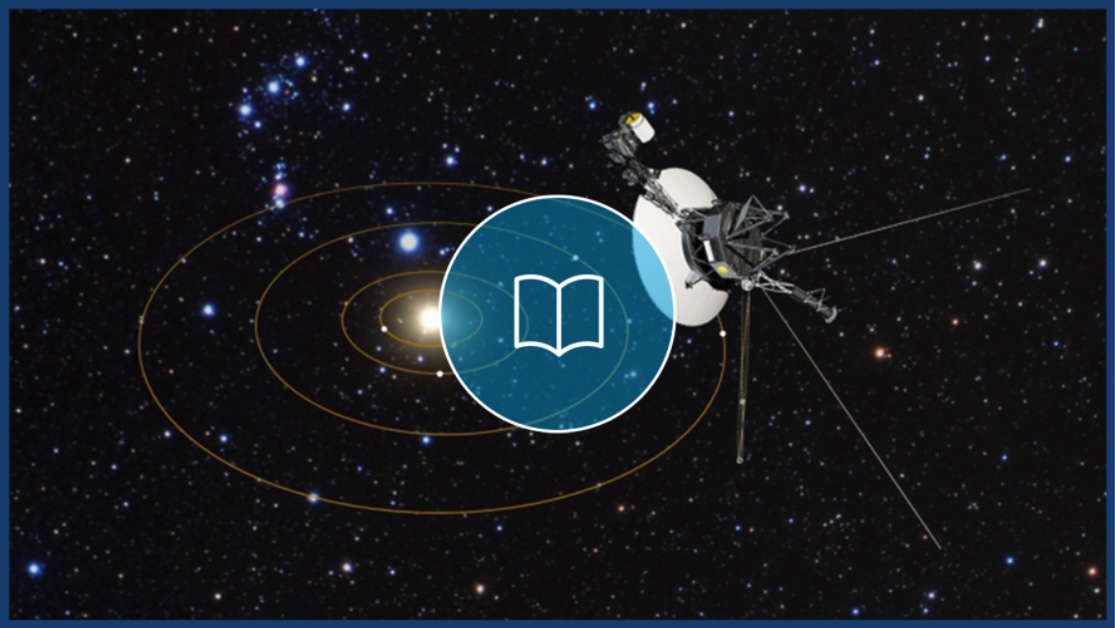
However, a recent NASA-led study calculates how dark matter’s gravity could subtly influence objects in our own cosmic backyard. While the Sun’s gravity dominates close in, farther out (towards the Oort Cloud), the pull from proposed galactic dark matter becomes more significant: about 45% of the total gravitational force at those distances may come from dark matter. This means long-range spacecraft (like Voyager, New Horizons) could see their trajectories slightly altered. The researchers suggest a future mission: if a probe dropped a reflective ball far from the Sun, we could measure tiny deviations caused by dark matter, offering a way to detect it directly.
WHAT IF WE’RE WRONG?
Some researchers argue that dark matter, like the 19th century idea of the “luminiferous aether”, might one day be replaced by a deeper theory, such as Modified Newtonian Dynamics (MOND) or Tensor Vector Scalar theories. These models attempt to explain cosmic phenomena without invoking unseen matter. Most struggle with the full range of evidence, but they force valuable questions about gravity itself.
THE NEXT DECADE: A COSMIC RECKONING
We are entering the most decisive era yet in the search for dark matter. Advanced detectors, from labs deep underground to space-based observatories, are pushing sensitivity to unprecedented levels, probing the faintest possible interactions. The next ten years could finally reveal whether dark matter is made of WIMPs, axions, or something entirely unexpected… or whether our understanding of gravity itself needs revision. Whatever the outcome, this decade promises transformative insights that could rewrite the story of the universe.
Still feel in the dark? Check this out…
This World Science Festival conversation features Brian Greene interviewing Katherine Freese, director of the Weinberg Institute for Theoretical Physics. They review the history of dark matter, its key evidence like galaxy rotation curves and the infamous Bullet Cluster. Freese explains leading dark-matter candidates such as WIMPs and axions, experimental searches, and her own work on dark stars and the idea of a “dark Big Bang.” The conversation highlights both the progress and ongoing challenges in uncovering the nature of the universe’s invisible components.